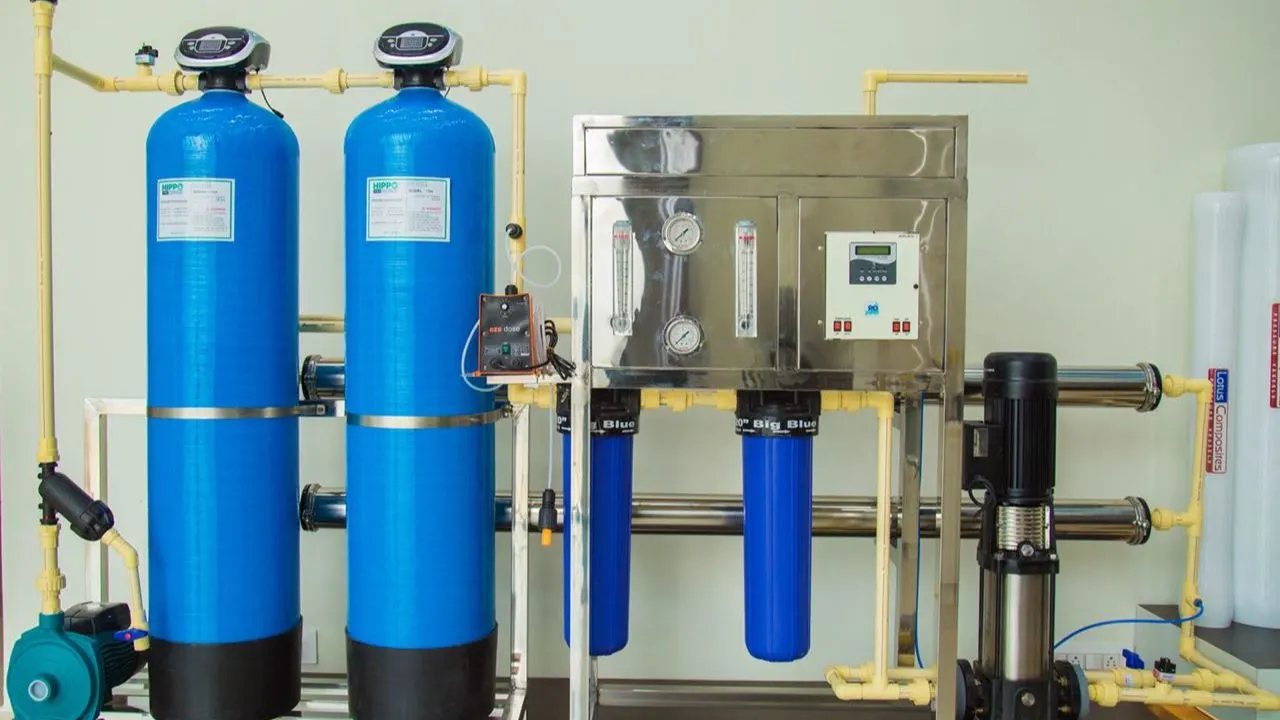
A Reverse Osmosis plant is one of the most effective and widely used systems for purifying water across residential, commercial, and industrial sectors. It works on the principle of forcing water through a semi-permeable membrane to remove dissolved salts, impurities, and contaminants. R&J Waste Water Treatment Organization is a trusted name of RO Plant, we offer high-quality RO components and systems designed to deliver pure, safe, and reliable water treatment solutions.
15 Important Components of a Reverse Osmosis Plant
- Raw Water Pump: The process begins with the raw water pump, which draws untreated water from the source (borewell, river, or storage tank) and delivers it into the treatment line at the required pressure.
- Pressure Sand Filter (PSF): The Pressure Sand Filter is one of the initial filtration stages in a reverse osmosis plant. It removes suspended particles such as sand, dirt, and dust from the incoming water.
- Activated Carbon Filter (ACF): After sand filtration, water passes through the Activated Carbon Filter, which removes chlorine, odor, color, and organic impurities. This step is vital because chlorine can damage RO membranes if not properly filtered out.
- Antiscalant Dosing System: An antiscalant dosing system injects a special chemical into the water to prevent scaling and fouling on the RO membranes. Scaling can significantly reduce the efficiency of the RO plant, so this component helps maintain long-term performance and lower maintenance costs.
- Micron Cartridge Filter: The micron cartridge filter is another pre-treatment stage that removes any remaining fine particles before water enters the RO membrane.
- High-Pressure Pump: The high-pressure pump supplies the pressure required for the reverse osmosis process — typically between 10 to 20 bar for brackish water and up to 70 bar for seawater applications. It ensures that water molecules pass through the membrane while rejecting salts and impurities.
- RO Membrane: At the heart of every reverse osmosis plant is the RO membrane, a semi-permeable layer that allows only pure water molecules to pass through while rejecting dissolved solids, salts, and contaminants.
- Pressure Vessel: The pressure vessel holds and protects the RO membranes. It ensures that the membranes are properly sealed and can withstand the high pressures generated during operation. The number of vessels used depends on the capacity of the RO plant.
- Flow Meters: Flow meters are installed on both the permeate (pure water) and reject (wastewater) lines. They help operators monitor water flow rates and system performance.
- Pressure Gauges: Pressure gauges are used at various points in the system to measure inlet, outlet, and membrane pressures. These readings help in diagnosing issues like fouling, clogging, or scaling inside the system.
- Conductivity Meter (TDS Meter): The conductivity meter, also known as a TDS meter, measures the total dissolved solids (TDS) in the permeate water. It provides a quick indication of the water quality and the performance of the RO membranes.
- Control Panel: The control panel acts as the brain of the RO plant. It automates operations like starting and stopping pumps, regulating pressures, and monitoring key parameters.
- Chemical Cleaning System (CIP System): The Chemical Cleaning System (CIP) allows the system to be flushed with specialized cleaning chemicals to restore membrane efficiency without dismantling the entire setup.
- Storage Tank: Once the purified water passes through the reverse osmosis plant, it is collected in a storage tank. These tanks are usually made of stainless steel and are designed to keep the treated water free from recontamination.
- Post-Treatment Unit (Optional): Depending on the application, a post-treatment unit such as a UV sterilizer, ozone generator, or mineral cartridge may be added. These components ensure the water is microbiologically safer for drinking or industrial use.
Also Read : What is Membrane Filtration and How does it work?
Integration of RO Components in the System
RO components play a crucial role in the efficiency and longevity of the reverse osmosis plant. When integrated correctly, they ensure consistent performance, minimal downtime, and high-quality output. R&J Waste Water Treatment Organization offers complete RO plant systems that combine these components with advanced engineering and durable construction.
Their systems are designed for diverse applications, including:
- Industrial process water
- Boiler feed water
- Drinking water purification
- Effluent and wastewater recycling
- Pharmaceutical and food industries
A reverse osmosis plant is a complex system where each component plays a vital role in ensuring water purity and operational efficiency. R&J Waste Water Treatment Organization offers high-quality RO plant systems built with precision, durability, and efficiency in mind. Whether you are setting up a new RO plant or upgrading an existing one, our expertise and commitment to excellence make them the ideal partner for all your water purification needs.