R&J Waste Water Treatment Organization is a trusted name in the field of industrial and municipal water purification solutions. Our company continues to provide high-quality systems designed to ensure safe and efficient water purification. One of the most significant methods used by R&J Waste Water Treatment Organization is the Ultrafiltration Process, which plays a vital role in modern water treatment applications.
Ultrafiltration (UF) is a pressure-driven membrane filtration process used to remove suspended solids, bacteria, viruses, and other impurities from water. It is widely used in both industrial and domestic sectors as a reliable pre-treatment or final polishing stage in water purification systems.
What is Ultrafiltration Process ?
The ultrafiltration process is a membrane-based filtration technique that separates contaminants from water using semi-permeable membranes. These membranes act as physical barriers, allowing only clean water and certain dissolved substances to pass through while blocking larger particles and microorganisms. The process is sustainable, cost-effective, and easy to maintain, making it an ideal choice for industries like pharmaceuticals, food and beverages, power generation, and wastewater recycling.
Explain the Process of Ultrafiltration
- Feed Water Preparation: The water that needs to be purified first goes through a pre-filtration stage to remove large debris, sediments, and coarse particles.
- Pressurized Feed into the Membrane: The pre-treated water is pumped into the UF membrane module under controlled pressure. The system operates at a relatively low pressure (1–10 bar), making it energy-efficient compared to other filtration methods like reverse osmosis.
- Membrane Filtration Stage: Water flows through semi-permeable membranes with microscopic pores. Contaminants such as suspended solids, bacteria, viruses, and macromolecules are trapped on one side of the membrane, while purified water passes through.
- Permeate Collection: The clean water that passes through the membrane is collected for further use. It can be directly used for industrial processes, drinking, or as feed water for reverse osmosis systems.
- Concentrate Discharge: The impurities that remain on the membrane surface are flushed out periodically. This step maintains consistent flow rates and ensures membrane efficiency.
Also Read : DM Water Plant: Process, Principles, and Industrial Uses
Advantages of the Ultrafiltration Process
The ultrafiltration process is preferred over traditional filtration methods for several reasons:
- High Filtration Accuracy: The membrane pores effectively remove microscopic contaminants, ensuring superior clarity and hygiene in the treated water.
- Chemical-Free Process: Unlike conventional methods that rely heavily on chemical dosing, ultra filtration relies purely on physical separation, making it eco-friendly and safe.
- Consistent Water Quality: Regardless of variations in feed water quality, UF systems maintain stable output, ensuring reliability across applications.
- Compact and Energy-Efficient: The system requires less space and energy compared to conventional filtration systems.
- Easy Maintenance: With periodic backwashing and simple cleaning procedures, the UF system offers long operational life and reduced maintenance costs.
Applications of Ultrafiltration
- Drinking Water Treatment: Removes bacteria, viruses, and suspended impurities for safe consumption.
- Industrial Water Recycling: Recovers clean water from wastewater streams to reduce discharge and conserve resources.
- Food & Beverage Industry: Ensures purity and consistency in processing water.
- Pharmaceutical Manufacturing: Provides ultra-pure water required for formulations and cleaning.
- Pre-Treatment for RO Plants: Protects reverse osmosis membranes from fouling and extends system lifespan.
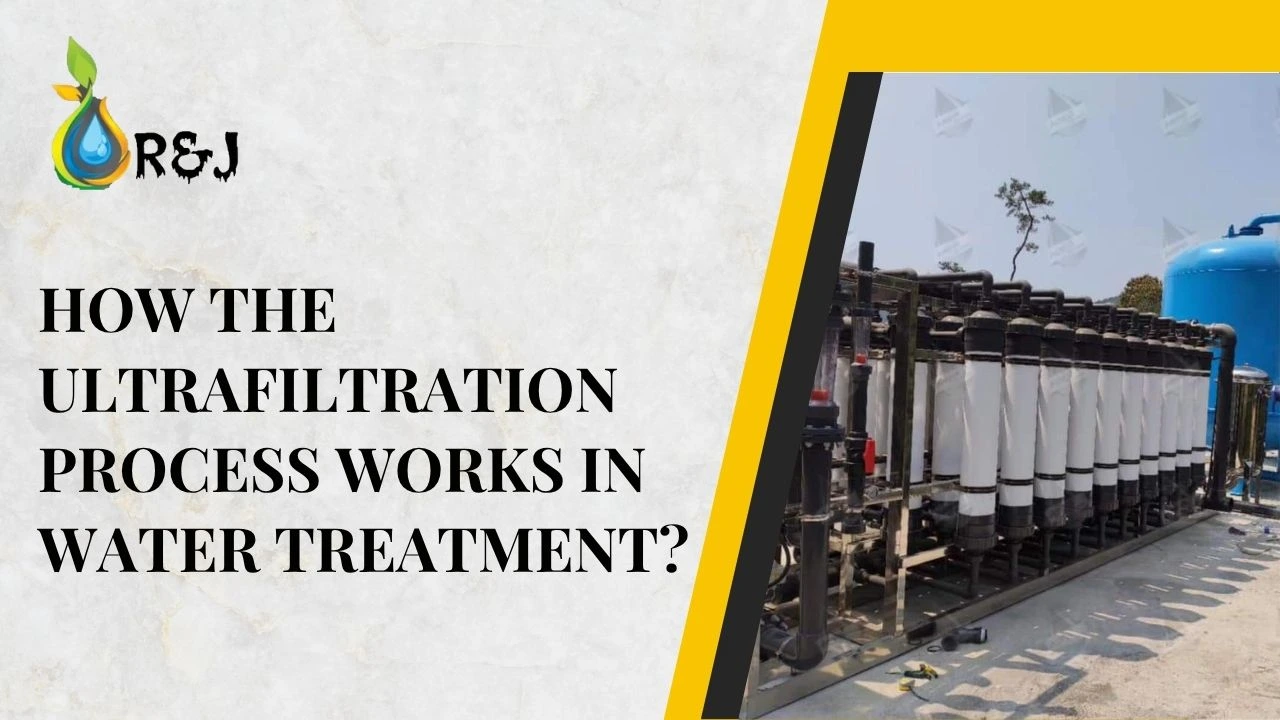
The ultra filtration diagram used in these setups can vary based on specific applications, but the core principle remains the same—membrane-based separation of impurities to achieve superior water purity.
The ultrafiltration process is a powerful, sustainable, and efficient method for purifying water across various industries. It ensures that the treated water is free from bacteria, suspended solids, and other harmful contaminants without removing essential minerals. R&J Waste Water Treatment Organization continues to offer top-quality ultrafiltration systems designed for performance, longevity, and ease of operation. With a strong focus on innovation and customer satisfaction, our company remains a trusted partner in building a cleaner, safer, and more sustainable future for water treatment.