R&J Waste Water Treatment Organization is a trusted name in the field of industrial and commercial water treatment solutions, known for engineering reliable and high-quality systems for various industries. Among the many technologies used today, the demineralization water treatment plant is one of the most essential, especially in sectors where high-purity water is mandatory. We offer advanced purification systems that ensure consistent performance, long life, and safe operation.
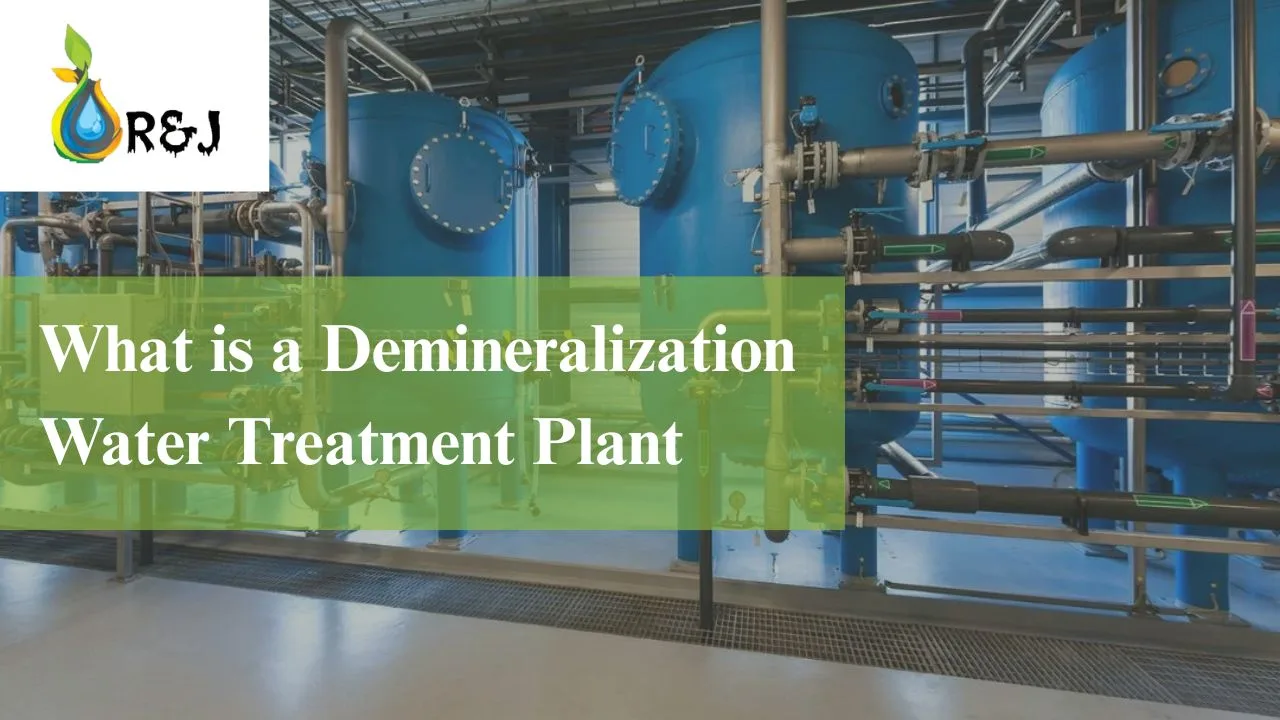
A demineralization water treatment plant, also known as a demineralised water plant or demineralized water plant, is used to remove dissolved minerals, salts, and impurities from raw water through ion-exchange technology. Industries that require pure, mineral-free water such as pharmaceuticals, boilers, refineries, food processing, chemical manufacturing, and electronics depend heavily on DM water systems to maintain product quality and efficient operations.
Demineralization Water Treatment Plant Working Principle
A demineralization plant works on the principle of ion exchange, where positively and negatively charged ions responsible for hardness and contamination in water are replaced with hydrogen (H⁺) and hydroxyl (OH⁻) ions. When these ions combine, they form pure water (H₂O), free from minerals like calcium, magnesium, chloride, nitrate, sulfate, sodium, potassium, and iron.
The result is DM water, which is soft, mineral-free, and suitable for sensitive industrial applications where even small amounts of dissolved solids can cause scaling, corrosion, contamination, or product defects.
Also Read : Boiler Water Treatment: What It Is and How It Works
Why is Demineralized Water Important?
Industries prefer demineralized water because it ensures:
- Zero scaling in boilers
- High efficiency in thermal systems
- Improved product purity in pharma and chemical processes
- Smooth functioning of cooling systems
- Reduced equipment damage
- Compliance with manufacturing standards
R&J Waste Water Treatment Organization designs DM plants that ensure consistent output, low chemical consumption, and easy maintenance.
DM Water Treatment Plant Process – How It Works
The dm water plant process typically involves multiple stages, each designed to remove specific impurities. Below is a detailed explanation of how a demineralization plant works:
1. Raw Water Pre-Treatment: Before entering the DM plant, raw water is passed through pre-treatment units such as:
- Sand filter
- Activated carbon filter
- Softener (optional)
This step removes suspended impurities, organic matter, and chlorine to protect the ion-exchange resins.
2. Cation Exchange Unit: In this stage, water passes through a vessel containing cation resin.
The resin exchanges positive ions like:
- Calcium (Ca²⁺)
- Magnesium (Mg²⁺)
- Sodium (Na⁺)
- These minerals are replaced with hydrogen ions (H⁺).
This process reduces hardness and prepares the water for further purification.
3. Anion Exchange Unit: The water then moves to the anion exchange resin chamber.
This resin removes negative ions like:
- Chloride (Cl⁻)
- Sulfate (SO₄²⁻)
- Nitrate (NO₃⁻)
- Carbonates
- The anions are exchanged with hydroxyl ions (OH⁻).
Hydrogen (H⁺) from the cation resin and hydroxyl (OH⁻) from the anion resin combine to form pure water (H₂O).
4. Mixed Bed Unit (Optional): For industries requiring ultra-pure water, a mixed bed unit is used. It contains a mixture of both cation and anion resins for polishing the water to the highest purity levels.
This step ensures:
- Zero conductivity
- Ultra-low TDS
- Perfect purity
R&J Waste Water Treatment Organization offers and provides mixed bed polishers for industries that require top-tier water quality.
5. Regeneration Process
Over time, the resins lose their capacity.
To restore their efficiency, the plant undergoes regeneration:
- Cation resins are regenerated using acid (HCl or H₂SO₄)
- Anion resins are regenerated using caustic soda (NaOH)
Types of Demineralization Plants
- Two-Bed DM Plant: Consists of separate cation and anion units. Suitable for medium-purity needs.
- Mixed Bed DM Plant: Provides high-purity water using a combined resin bed.
- Automatic DM Plant: PLC-based operation with minimal manual intervention.
- Skid-Mounted DM Plant: Compact, mobile, and easy to install, suitable for industries with space limitations.
R&J Waste Water Treatment Organization designs each system according to industry requirements, ensuring efficient water purification and long-term reliability.
Applications of Demineralized Water
DM water is widely used in:
- Pharmaceutical manufacturing
- Boiler feed water
- Electronics and semiconductor production
- Food and beverage processing
- Chemical formulation
- Power plants
- Cooling towers
- Cosmetics and personal care products
In all these sectors, even minor contamination can affect product quality or damage machinery.
Advantages of Using a Demineralisation Plant
A demineralisation plant offers several significant benefits:
- High-purity water with very low TDS
- Protection of boilers and heat exchangers
- Minimal maintenance cost
- Increased equipment lifespan
- Improved product quality
- Consistent performance
- Easy operation and regeneration
With high-quality materials and smart engineering, R&J Waste Water Treatment Organization ensures excellent efficiency and long service life.
A demineralization water treatment plant plays a crucial role in delivering high-purity water required for various industrial applications. By using advanced ion-exchange technology, a demineralized water plant or demineralised water plant effectively removes dissolved salts and minerals, ensuring safe and pure water output. R&J Waste Water Treatment Organization continues to offer reliable, durable, and customized DM water plants that meet the highest industry standards. With expert engineering, strong after-sales support, and a commitment to innovation, our company stands as a dependable partner for businesses seeking efficient and sustainable water purification solutions.