R&J waste water treatment Organization is committed to making water knowledge simple and accessible for everyone. We offer a wide range of water treatment solutions, but we also believe in educating people about the basic terms used in the industry. One such essential term is PPM, which plays a major role in water testing, chemistry, environmental science, and industrial applications.
What is PPM or Parts Per Million?
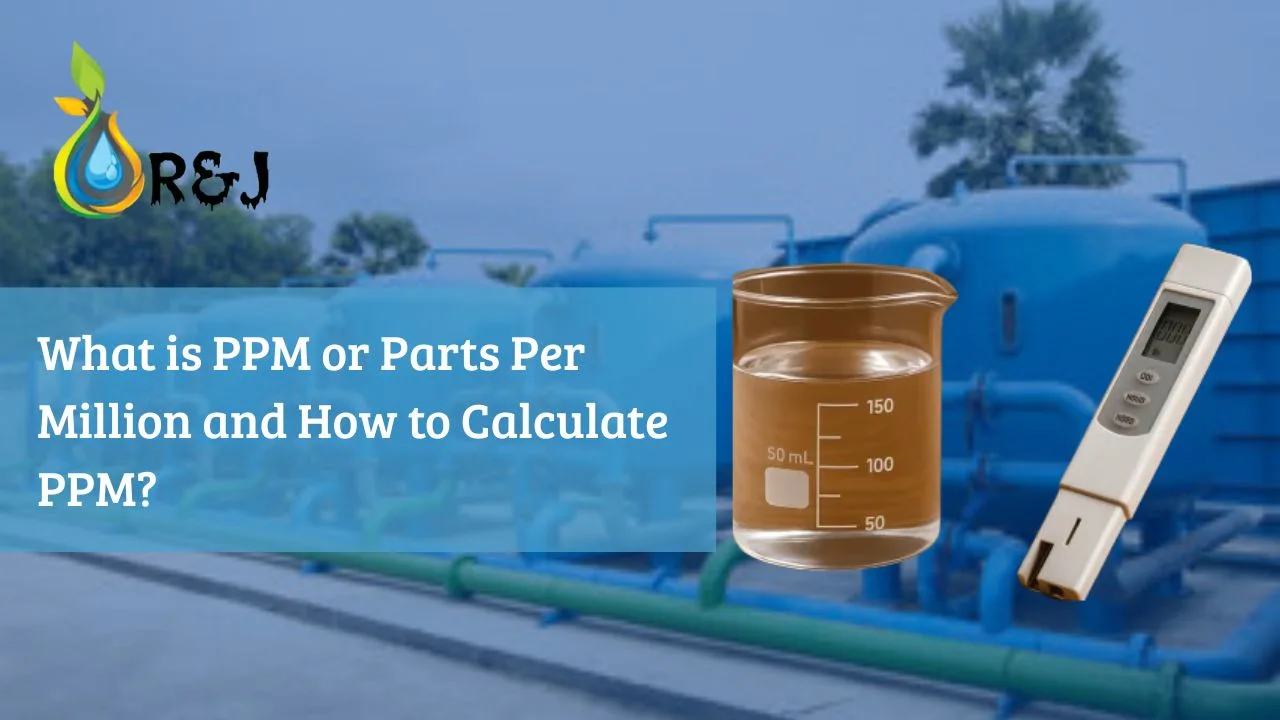
The ppm full form is Parts Per Million, a unit that measures very small concentrations of a substance in air, water, soil, or any solution. When we say ppm full form in chemistry, we mean how many parts of a particular component exist per million parts of the total mixture.
In simple words:
1 ppm = 1 part of substance in 1,000,000 parts of solution.
PPM Full Form Water – What Does It Mean in Water Testing?
When people discuss ppm full form water, they are referring specifically to the measurement of particles or dissolved solids in water. These particles may include minerals, salts, chemicals, or contaminants.
In water testing:
1 ppm = 1 mg of substance per liter (mg/L).
This is widely used to measure:
- TDS (Total Dissolved Solids)
- Chlorine concentration
- Hardness levels
- Iron contamination
- Fluoride or nitrate presence
At R&J waste water treatment Organization, we depend on ppm values while analyzing water samples to recommend the right filtration, purification, or softening solutions. Accurate ppm readings ensure that the water you drink is safe and meets quality standards.
Also Read : Understanding TDS Levels in Water and How Water Purifiers Can Help
Why Is PPM Important?
PPM is important because even a small change in concentration can impact water quality and human health. For example:
- High ppm in drinking water means more dissolved solids and potential contaminants.
- Low ppm may mean the water lacks essential minerals.
- In chemistry, incorrect ppm levels can affect experiment results.
- In industry, ppm helps maintain strict quality standards.
R&J waste water treatment Organization depends heavily on ppm readings while offering water treatment and purification services.
How R&J waste water treatment Organization Uses PPM in Water Treatment
At R&J waste water treatment Organization, ppm measurement is part of our daily water analysis process. We offer:
- Water testing and lab analysis
- RO and water softening system design
- Industrial water treatment solutions
- Drinking water purification systems
Our experts assess the ppm value to determine whether the water is hard, contaminated, mineral-rich, or safe for drinking. Based on these results, we recommend the most suitable treatment process for homes, industries, and commercial spaces.
Parts Per Million in Chemistry – Use of PPM in Chemistry
In chemistry, Parts Per Million (PPM) is one of the most widely used units for measuring extremely small concentrations of a substance in a solution. The ppm full form in chemistry refers to the number of parts of a solute present per one million parts of the solution. This makes ppm essential when dealing with dilute chemical mixtures where the concentration is too low to be expressed in percentages.
How PPM Is Used in Chemistry
- Measuring Impurities: In chemical solutions, even a tiny amount of impurity can affect reactions. PPM is used to measure those impurities with accuracy.
- Preparing Chemical Solutions: When preparing highly diluted solutions, chemists calculate the exact ppm to ensure the desired concentration is achieved.
- Quality Control in Industries: Industries such as pharmaceuticals, water treatment, food processing, and petrochemicals use ppm to test purity levels and chemical composition.
- Environmental Chemical Analysis: PPM is used to detect chemical pollutants in air, soil, and water samples. This helps scientists monitor toxins and ensure environmental safety.
Understanding the ppm full form, ppm long form, and how to calculate ppm empowers you to check water quality more confidently. Whether you’re learning about chemistry, industry, or home water testing, ppm helps you measure concentration precisely. At R&J waste water treatment Organization, we use ppm as a key tool in designing effective and efficient water treatment systems. If you ever need help analyzing water quality or selecting the right purification method, our team is ready to provide complete support.